Generating a bill is easy.
Getting the customer to notice it, completing the payment, and getting that payment correctly updated in your billing system is the hard part.
For a business running thousands of recurring bills, the collection stack usually looks like this:
WhatsApp reminders from one vendor. A payment link that redirects to a separate website. BBPS integrated on its own. A payment gateway with its own dashboard. Finance reconciling all of it by hand.
And when a payment fails on one channel, the customer is on their own.
That's not multichannel collection. That's five disconnected payment channels.
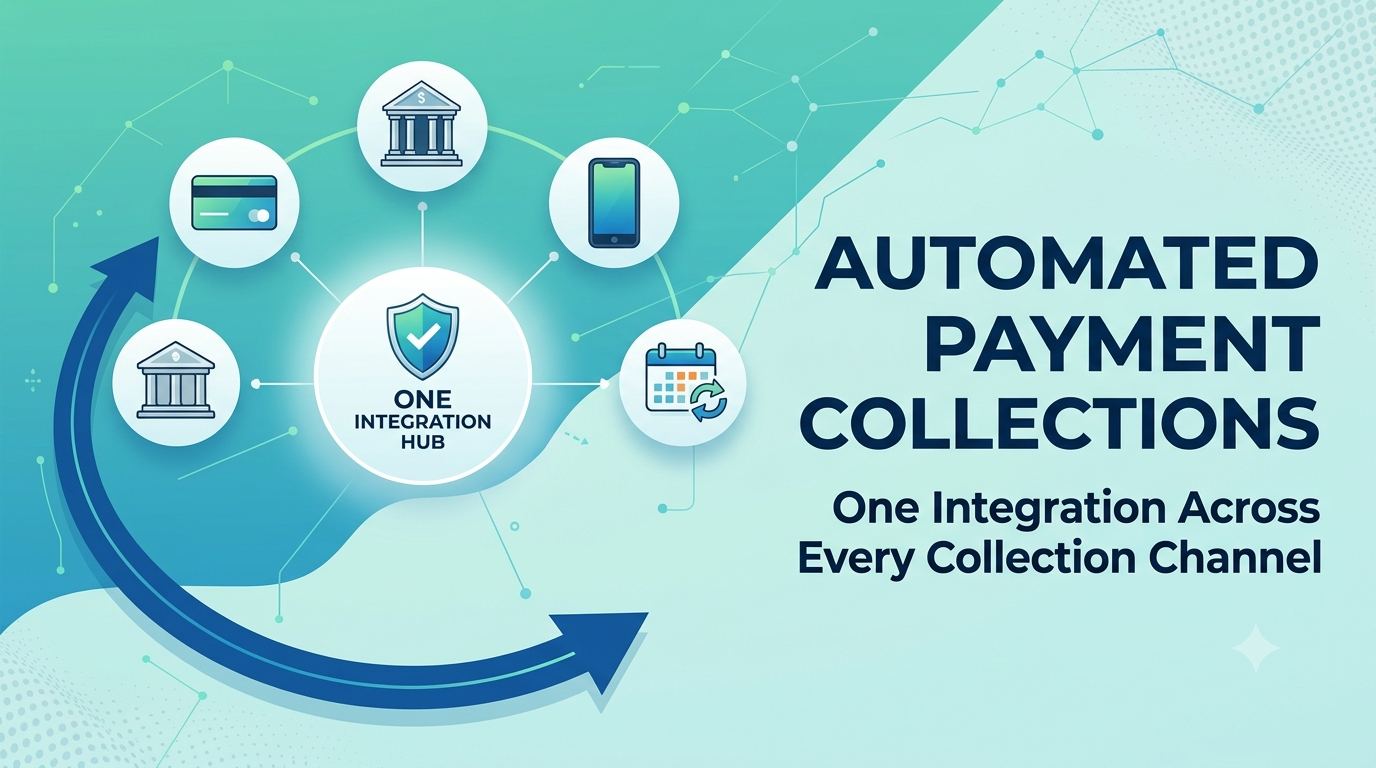
DemandPay replaces them with one integration that connects your billing system to every channel your customers use and keeps the collection moving until the bill is paid and reconciled.
One integration. Every collection channel. One reconciled payment journey.
Multiple Channels vs. Connected Collections
Most businesses already have several ways to get paid: WhatsApp links, a website, UPI, BBPS, gateway links, and email reminders.
Each one runs independently. Customer context lives in one place, transaction status in another, and reconciliation in a third. If the customer's first attempt fails, nothing else knows.
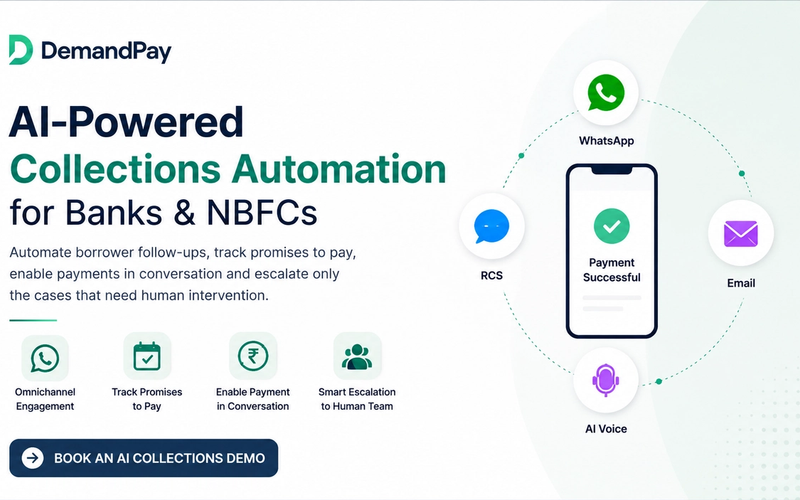
DemandPay puts every channel on the same engine. One customer record, one bill, one payment status, and one reconciliation state are shared across WhatsApp, RCS, email, Quick Pay, and BBPS.
So when one channel fails, the next one picks up where it left off.
What DemandPay Does
DemandPay is the collection orchestration layer between your billing system, your customers' phones, and India's payment rails.
Billing / ERP → Reach customer → Collect → Recover failed attempts → Reconcile → Complete business action
Your billing system stays the system of record. DemandPay runs the collection loop around it—for every customer, every billing cycle.
How It Works
1. Sync
DemandPay pulls your customer base and outstanding invoices from your billing system—a daily batch, plus real-time lookup whenever a customer opens a payment journey.
2. Reach
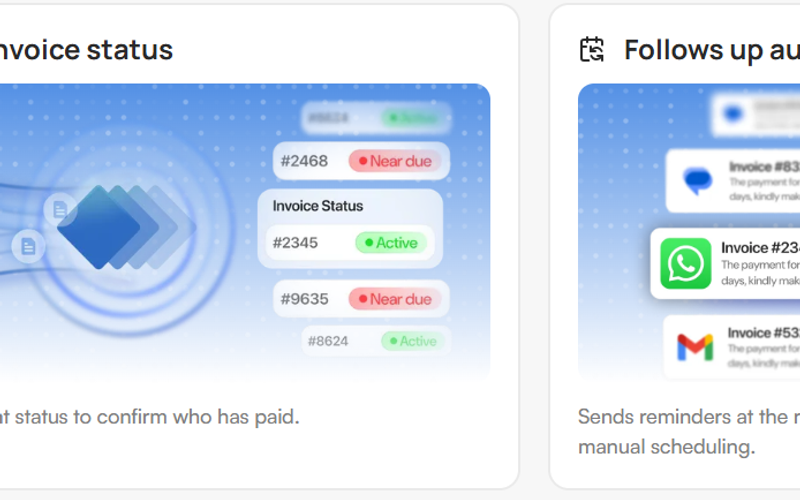
As a bill approaches its due date, the customer gets a branded reminder on WhatsApp, RCS, or email: their plan, their amount, their due date, and two buttons—Pay Now and Explore Plans.
3. Collect
The customer pays in a few taps without leaving the message. UPI by intent or QR, UPI autopay, credit and debit cards, EMI, net banking, or wallets—one branded screen. Or they pay through any of 100+ BBPS apps.
4. Reconcile
Gateway success isn't the end. DemandPay posts the payment to your billing system, marks the invoice paid, activates the renewed plan, and sends the customer a confirmation with a downloadable receipt.
When One Channel Fails, the Next One Continues
This is where connected collections earn their keep.
A broadband customer opens their banking app, fetches the bill through BBPS, and tries to pay. The transaction fails.
In a traditional setup, the journey ends there. The customer tries again later, or searches for your website, or calls support, or just postpones.
With DemandPay, the failure triggers the next collection action. Within minutes, the customer receives a WhatsApp message:
We couldn't complete your payment this time, but your bill is still ready. Complete it here in a few taps. [Complete Payment]
Same customer. Same bill. No starting over.
BBPS attempt → Failed → WhatsApp recovery → Paid → Reconciled
The same logic runs across every channel. An UPI Autopay mandate fails on the due date → WhatsApp reminder → no response → RCS follow-up → customer pays → reconciled.
The engine keeps moving toward resolution instead of treating every channel as its own dead end.
—See a failed payment recovered across channels against your billing system.
Pay-Now vs. Explore Plans
Not every customer receiving a renewal reminder wants the same plan again.
DemandPay puts two paths in the same message.
Pay Now—the fast lane. Reminder → review amount → pay → done.
Explore Plans—the upsell lane. The customer browses your live plan catalogue, picks a different speed, validity, or add-on, and pays. The new plan is posted to your billing system for activation.
A broadband subscriber on a ₹649/month 40 Mbps plan sees the ₹1,049 80 Mbps plan and the ₹7,699 annual plan right next to it—at the exact moment they're deciding whether to renew.
A collection reminder becomes a revenue-expansion moment.
UPI Autopay: Collect Without Reminding
For genuinely recurring bills, the best reminder is no reminder.
DemandPay sets up a UPI autopay mandate from the same journey. The customer approves once. Every subsequent bill is collected on the due date, confirmed to the customer, and reconciled in your billing system.
If a mandate fails, the customer drops into the regular recovery journey. Reminders become the fallback, not the default.
Five Channels, One Engine
You switch on the channels you want. The same payment engine, recovery logic, and reconciliation run behind all of them.
WhatsApp—the full journey inside the chat: reminder, plan review, payment, confirmation, and recovery messages.
RCS—the same interactive journey on supported Android devices, with verified business identity, branded cards, and in-message payment.
Email—branded reminders with a direct link into the payment flow.
Quick Pay—a Pay Now button on your own website that opens an operator-branded page. The customer enters a mobile number, account number, or subscriber ID, sees their dues, and pays. No login, no password.
BBPS—your bills payable across 100+ apps on the Bharat BillPay network, including Google Pay, PhonePe, Paytm, CRED, HDFC, SBI, and Axis. Payments and failures flow back into the same engine.
Every screen carries your logo, your plans, and your pricing. DemandPay runs quietly underneath.
Why Reconciliation Matters
A customer pays, but your billing system still shows the amount outstanding. What happens next: another reminder, an unnecessary collection call, delayed activation, a complaint, and someone in finance fixing it by hand.
A collection platform has to answer two questions, not one: Has the customer paid? And does the business system know?
DemandPay closes that loop on every payment - marking the invoice, updating the balance, renewing the plan, crediting the wallet, or triggering whatever comes next in your workflow.
Partner and LCO Wallet Top-Ups
Collections aren't only from end customers.
Distributors, agents, and local cable operators run prepaid wallets that fund service activation. When the balance runs out, service stops. Traditionally the partner calls you, confirms the balance, transfers money, sends a screenshot, waits for verification, and waits again for the credit.
With DemandPay:
- Check balance—the partner asks in chat, and DemandPay pulls it from your backend.
- Add money—the partner picks an amount and pays digitally.
- Wallet updated—DemandPay verifies the transaction, credits the wallet, and confirms the new balance.
Idempotency controls make sure a payment is never credited twice.
Results
Editor note: Fill before publishing. Even one number changes this page.
[CUSTOMER NAME], a [broadband / cable] operator with [X] subscribers, moved recurring collections to DemandPay and saw:
- [X%] of renewals paid before due date
- [X] days faster average time-to-pay
- [X] hours of manual reconciliation removed per month
One Integration, Six APIs
DemandPay doesn't replace your billing system. It connects to it once—and that one connection powers every channel.
You expose six endpoints—customer list, fetch invoice, post payment, check payment status, get plans, and renew plan—using whatever authentication you already run. DemandPay calls them to sync customers, pull bills, post payments, and activate plans.
Go-live is four steps:
- Integrate—you expose the APIs, and we connect and configure.
- Validate—we run end-to-end tests in staging against your test data.
- UAT—you confirm journeys, branding, and reconciliation.
- Cut over—the production switch, live collection begins.
Payment posting is idempotent. Staging and production are separate. Every error comes back machine-readable.
No separate BBPS integration. No separate WhatsApp vendor. No separate gateway reconciliation. One integration.
Frequently Asked Questions
How is DemandPay different from sending WhatsApp payment links?
A WhatsApp link sends the customer to an external page to start over. DemandPay runs the whole journey in the chat—bill context, plan selection, payment, confirmation—and recovers failed payments from other channels into the same conversation.
What happens if a customer's BBPS payment fails?
DemandPay triggers a WhatsApp recovery message with the same bill and a one-tap path to complete payment. The customer doesn't start over.
Can DemandPay recover failed payments through another channel?
Yes. Any failed attempt—BBPS, autopay mandate, gateway—triggers the next channel in your configured sequence until the bill is paid.
Which payment methods are supported?
UPI, UPI Autopay, credit and debit cards, EMI, net banking, and wallets across all digital channels. BBPS adds 70+ partner and bank apps.
Does DemandPay replace our billing software?
No. Your billing or ERP platform remains the system of record. DemandPay integrates over APIs and runs collection, recovery, and reconciliation around it.
Can customers change plans before paying?
Yes. Every reminder offers Pay Now and Explore Plans. The selected plan is posted to your billing system for activation.
Can DemandPay handle LCO or partner wallets?
Yes. Partners check balances and top up wallets in chat, and DemandPay credits the wallet in your backend after verifying the payment.
Stop Managing Collection Channels Separately
Businesses don't need another reminder tool. They need their collection channels to work together.
A customer starts on BBPS. Recovers through WhatsApp. Pays through UPI. And the billing system is updated before they close the app.
The customer sees one simple payment. You get one connected collection infrastructure.
Automate your collection journey with DemandPay.
Book a Demo
Book a DemoVipin Kamal